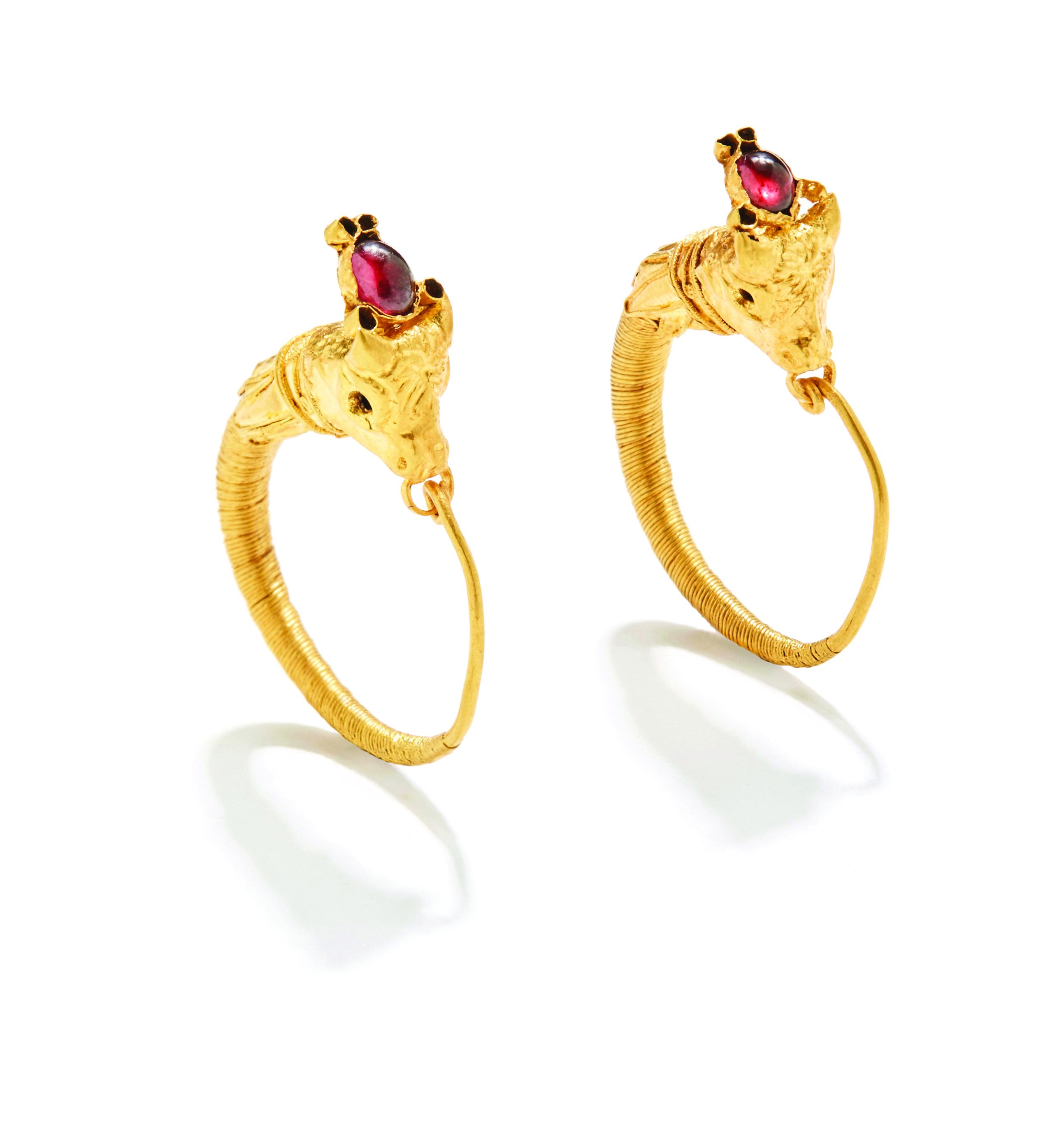
Gold earrings. Paros. 1st c. B.C.
Although Mykonos is perhaps the most visited place in Greece (with estimates ranging between one and two million visitors per year), the island's archaeological museum is not one of its biggest attractions. If you've ever walked down the beach at Mykonos Old Port, you must remember a low-rise, unassuming building overlooking the bay to the north: that's the island's Archaeological Museum, which despite its cultural importance and unique collection of pottery receives a mere 8,000 visitors per year.


Silver Hairpin by Minas.
Pair of bronze pinswith bird-form heads. Kythnos. End of the Geometric – beginning of the Archaic period.
This is about to change with a new state-led initiative which involves the renovation of regional archaeological museums in the Cyclades and the production of a must-see exhibition that will travel to several islands over the coming years. Titled "Vanity: Stories of Jewellery in the Cyclades", the exhibition is organised by the Ephorate of Cycladic Antiquities and presents invaluable treasures from the Cyclades paired with precious creations by a group of contemporary Greek jewelry designers and goldsmiths.


Gold bracelet. Naxos. 850-760 B.C
Nikos Koulis
From prehistoric Cycladic pendants to Roman necklaces and Byzantine rings, the exhibition presents archaeological artefacts that are exhibited in public for the first time, paired with treasures from the Folkore Museum of Mykonos, the Byzantine Museum in Athens and many other collections. According to the curators, all of these items were selected as "to highlight their role as evidence of human vanity and coquetry, thus stressing their timeless function and linking them with contemporary humans." Indeed, contemporary creations by Greek designers complement the exhibition, proof that Greece's jewellery tradition is as vibrant and prolific as ever. The exhibition will remain on view in Mykonos for a year before traveling to its next Cycladic destination in 2017.


Yannis Sergakis
Bronze spectacle fibula. Despotiko. 8th c. B.C.
The exhibition highlights the role of jewels as evidence of human vanity and coquetry, thus stressing their timeless function and linking them with contemporary humans

Lito
Participating Designers
Deux Hommes, Elena Syraka, Ileana Makri, Ιoanna Souflia, Lito, Minas, Νikos Koulis, Sofia Vamiali, Sophia Kokosalaki, Two is Company, Venyx by Eugenie Niarchos, Yannis Sergakis.

Actually, in ancient times, jewelry was not just for vanity. It was medicinal, due to healing properties of stones and precious metals.
Most certainly thanks so much for this feedback! Keep well and thanks for reading through any feedback is always welcome